
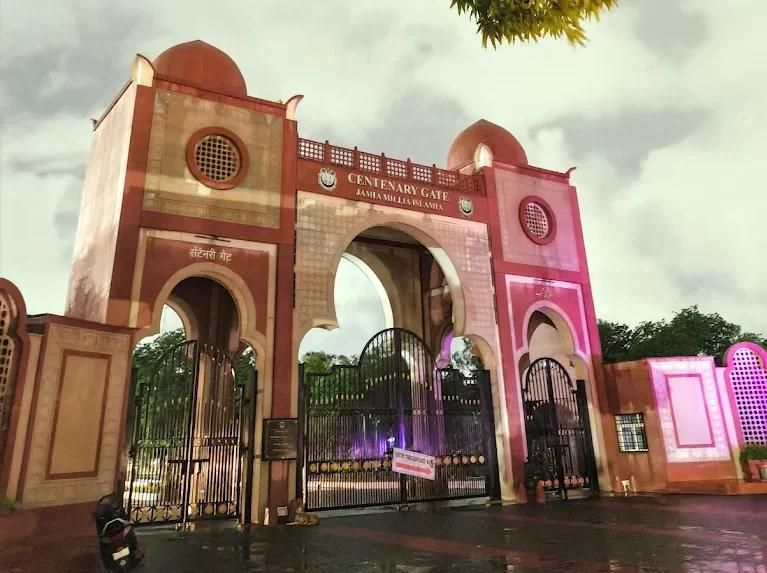
Delhi High Court Asks Jamia Millia Islamia to Address Alleged Religious Bias in Outsourced Staff Hiring
The Delhi High Court has asked Jamia Millia Islamia to respond to a Public Interest Litigation (PIL) alleging religious discrimination in the recruitment of outsourced non-teaching staff at the university. The case was heard by a bench led by Chief Justice D.K. Upadhyaya and Justice Tejas Karia after a petition was filed by Jamia employee Ram Niwas Singh. The plea questioned the university's March 24 notification allowing 986 outsourced employees, hired through Everest Human Resource Consultants, to continue working at the institution.
According to the petition, around 720 of these employees belong to the Muslim community, raising concerns about alleged bias in the hiring process. Senior advocate Arun Bhardwaj, appearing for the petitioner, argued that Jamia, as a centrally funded university, must follow constitutional principles of equality and non-discrimination even when recruitment is done through a private agency. The petition stated that routing recruitment through a private agency cannot dilute constitutional obligations of fairness, transparency, and non-discrimination in public employment.
The plea claimed the recruitment process violated Articles 14 and 16 of the Constitution, which guarantee equality before law and equal opportunity in public employment. It further alleged that the large number of employees from one community pointed towards a "systemic bias" and resulted in the exclusion of equally qualified candidates from other communities. The petitioner has also sought directions from the court for a fresh recruitment process that ensures fair and transparent hiring practices.
During the hearing, the High Court asked whether the outsourcing agency was required to follow provisions of the Jamia Millia Islamia Act and whether the university had included any conditions to ensure inclusivity in the recruitment process. Chief Justice Upadhyaya orally observed that the agency had hired 1,000 persons, of which 990 were of a particular denomination, and questioned whether the university asked them to exercise inclusivity. The court also sought details regarding sanctioned and non-sanctioned posts, contractual appointments, and daily wage workers engaged by the university.
Jamia's counsel, advocate Pritish Sabharwal, defended the appointments and argued that hiring by a private agency cannot automatically be considered unconstitutional simply because a large number of employees belong to one community. He said recruitment was carried out "purely on merits" and argued that similar patterns can be seen in contractual employment across different public institutions. The university also maintained that outsourcing itself does not amount to discrimination. After hearing both sides, the Delhi High Court issued notices to Jamia Millia Islamia and the recruitment agency and directed them to file their responses. The matter is now scheduled to be heard on September 11.
More High Court Updates News


Enjoying TindPosting?
Get the app for a faster, personalized news experience.
