
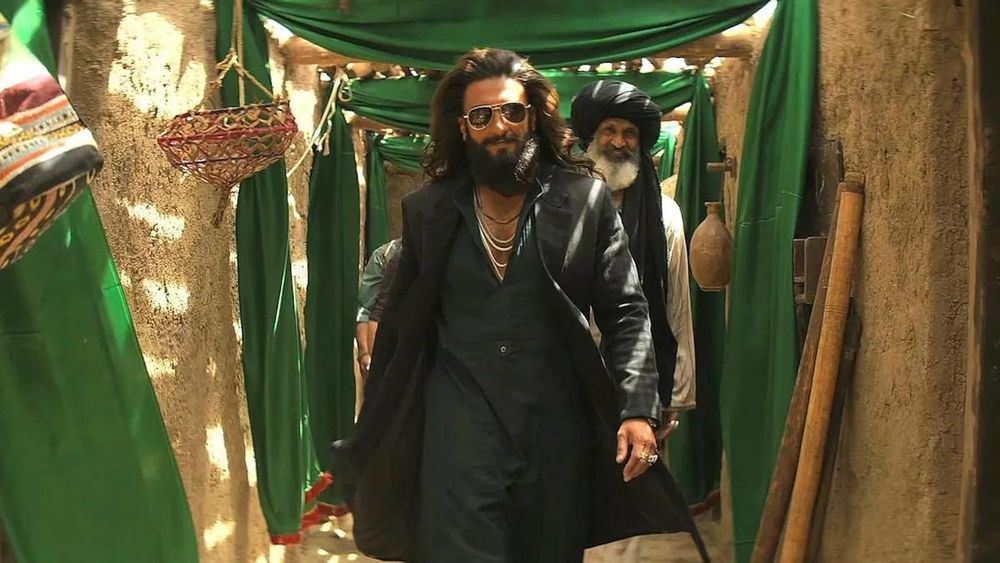
Dhurandhar: Hindutva Ideology and the Politics of Revenge
Dhurandhar: The Revenge, the latest film by director Aditya Dhar, has sparked strong reactions from both supporters and critics. The film is part of a trilogy of revenge-themed movies that are visually impressive and emotionally powerful. While some viewers find the film cathartic, others are disturbed by its content. Beyond its surface-level propaganda, the film carries a deeper religious and political message that reflects the rise of Hindu nationalism in India.
Dhar’s work, especially the Dhurandhar series, presents a cinematic vision of a “New India” shaped by Hindutva ideology—a blend of Hindu identity, militarism, and political power. The films portray Muslims as existential threats to Hindu civilization, drawing on historical grievances and religious symbolism. From the opening scenes, which quote Hindu scriptures, the narrative frames the conflict as a sacred duty: restoring Hindu honor through violence against those seen as enemies of Dharma.
The films depict real-life events like the IC-814 hijacking and the 26/11 Mumbai attacks not just as security failures but as religious desecrations. Muslim characters are often shown celebrating violence, with Islamic phrases like “Allahu Akbar” linked to terrorism. Real terrorist transcripts appear on red screens—a color symbolizing sacrifice and divine power in Hinduism—blending fact and fiction to create a sense of holy war. Indian Muslims are portrayed as traitors or collaborators, reinforcing the idea of a “fifth column” within the nation.
Aditya Dhar comes from a Kashmiri Pandit family, a community that suffered displacement in 1990 and whose pain has been central to Hindu nationalist narratives. This personal history adds emotional weight to his films, making them feel sincere rather than purely cynical. That sincerity makes the message more powerful and dangerous, as it transforms private grief into a national myth of victimhood and redemption.
The second film in the series escalates the rhetoric, showing opposition parties and universities as fronts for terrorist networks. Violence is glorified in musical sequences that resemble religious victory hymns. The climax takes place in a madrasa, which is destroyed completely—an act symbolizing the eradication of Islamic extremism. The villain’s final words echo historical Hindu nationalist fears about Islam, including forced conversion and sexual violence, ideas once promoted by V.D. Savarkar.
Unlike earlier nationalist films that included “good Muslims” who sided with India, Dhurandhar eliminates this possibility entirely. There are no innocent Muslims in Dhar’s worldview—the very concept is dismissed as a deception. This reflects a theological stance: Islam itself is the problem, not just its extremists. The film uses high production quality and emotional storytelling to blur the line between fiction and reality, making its message feel like lived truth.
Dhurandhar speaks directly to India’s aspirational Hindu middle class—a group that has grown economically but feels insecure about national identity and global status. The film offers them a fantasy of a strong, competent Hindu state that acts decisively against its enemies. It projects India as a dominant power controlling Pakistan’s fate, fulfilling a revanchist dream of regional supremacy.
Ultimately, Dhurandhar is not just political propaganda—it is political theology. It doesn’t argue its point; it reveals it as sacred truth. By framing violence as divine duty and enemies as irredeemable, it creates a worldview resistant to rational debate. The film’s success shows how deeply these ideas resonate in today’s India, offering a blueprint for future filmmakers and reinforcing the cultural dominance of Hindutva ideology.
Enjoying TindPosting?
Get the app for a faster, personalized news experience.
